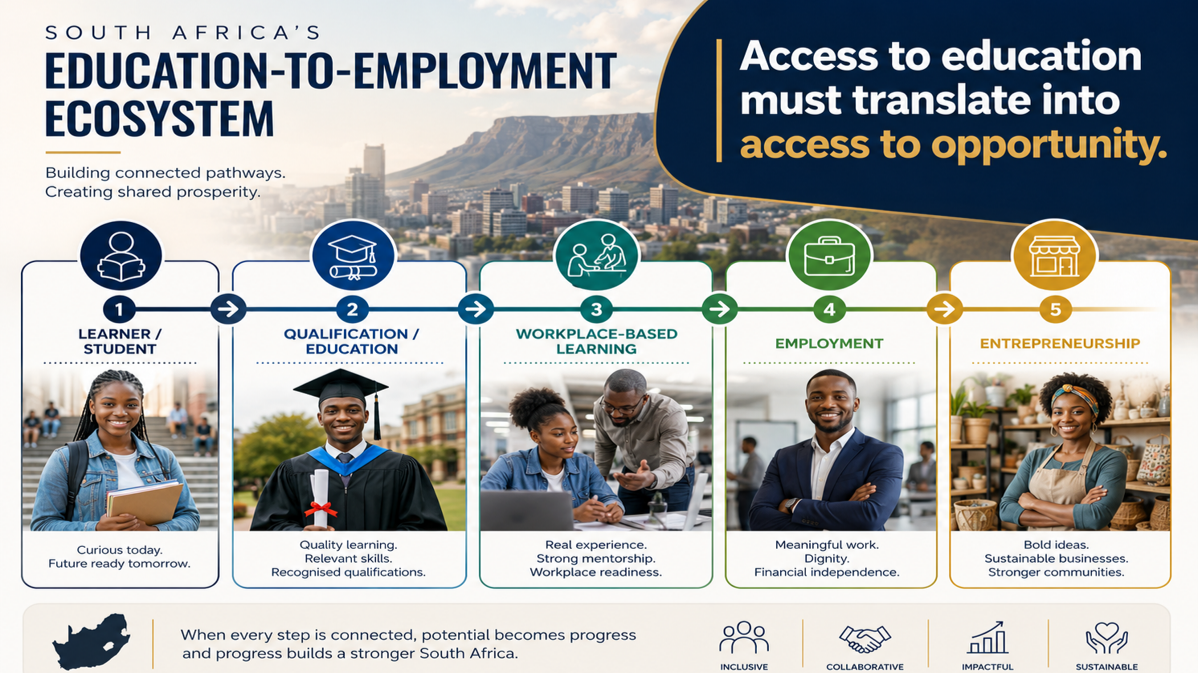
Youth employment initiatives are too important to become compliance rituals. Done properly, they renew capability, expand opportunity, and pay back multiples of their cost—because they solve actual work, not stage a classroom.
Continue Reading
Youth employment initiatives are too important to become compliance rituals. Done properly, they renew capability, expand opportunity, and pay back multiples of their cost—because they solve actual work, not stage a classroom.
Continue Reading
The piece explores how employers, training providers, and SETAs can work together to design, fund, and deliver learnerships that drive measurable skills outcomes. It also outlines governance models, risk management strategies, and inclusion practices for stronger absorption and ROI.
Continue ReadingThe gap between academic knowledge and real-world application is more pronounced than ever, and traditional classroom education, while foundational, often falls short in preparing students for the practical demands and dynamic challenges of their chosen careers. Employers are increasingly seeking candidates who possess theoretical knowledge and demonstrate practical skills, adaptability, and a proven ability to thrive in professional environments. This is where Work Integrated Learning (WIL) comes into play, offering a critical bridge between academic study and career readiness.
Continue ReadingEmployability is a significant concern for students, educators, and employers in the global job market. The traditional education model, focused primarily on theoretical knowledge, is increasingly supplemented with experiential learning opportunities to better prepare students for the workforce demands. Work Integrated Learning (WIL) has emerged as a pivotal strategy, blending academic studies with practical, hands-on experience in a professional setting. This hybrid approach includes internships, cooperative education (co-op) programs, apprenticeships, and industry-specific projects. WIL plays a crucial role in bridging the gap between academic and industry needs, making it a relevant and important tool in today’s job market
Continue Reading