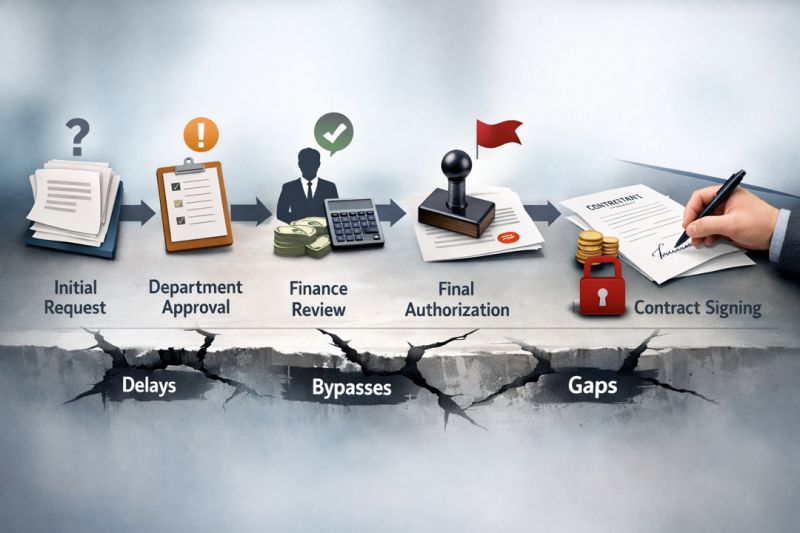
Why procurement is one of the most corruption-vulnerable business functions
Why procurement is one of the most corruption-vulnerable business functions.
Procurement sits at the intersection of money, discretion, suppliers, and urgency—a combination that creates an inherent risk of corruption if not actively managed.
Across many organisations, procurement exposure typically stems from:
High discretion with limited oversight – Decision-making authority is often concentrated, especially in sourcing, supplier selection, and contract variations.
Complex supplier ecosystems – Multiple vendors, intermediaries, and subcontractors obscure transparency and accountability.
Manual or fragmented processes – Inconsistent documentation, offline approvals, and system gaps create opportunity for manipulation.
Pressure to deliver quickly – Urgency is frequently used to bypass controls “just this once.”
Weak segregation of duties – The same individuals initiating, approving, and managing suppliers significantly increase risk.
Limited post-award scrutiny – Focus is placed on awarding contracts, not on monitoring performance, pricing drift, or scope creep.
When procurement controls weaken, corruption does not arrive loudly. It embeds quietly—in pricing, supplier relationships, contract extensions, and exceptions that become normalised.
Organisations that reduce procurement risk most effectively do three things well: they simplify structures, improve transparency, and introduce independent oversight where it matters most.
If you are reviewing your procurement operating model, Duja Consulting is available for a confidential discussion on how procurement outsourcing can strengthen controls, improve governance, and reduce exposure to corruption.
Connect with Duja Consulting!Follow us on LinkedIn!
Dominate Recruitment in Your Industry with aDynamic Virtual Recruitment Platform
Our solution focuses on reducing the need for face to face screening interviews, whilst allowing you to gain more dynamic insight into potential candidates at the outset of the recruitment process.
At Play Interactive Talent delivers a consistent interview experience.
Our solution is completely automated and therefore we can guarantee a very consistent interview experience for all first screening interviews with candidates, as there is no risk of resources altering the competency interview process.
MASTER CLEANSE BESPOKE
IPhone tilde pour-over, sustainable cred roof party occupy master cleanse. Godard vegan heirloom sartorial flannel raw denim +1. Sriracha umami meditation, listicle chambray fanny pack blog organic Blue Bottle.
MASTER CLEANSE BESPOKE
IPhone tilde pour-over, sustainable cred roof party occupy master cleanse. Godard vegan heirloom sartorial flannel raw denim +1. Sriracha umami meditation, listicle chambray fanny pack blog organic Blue Bottle.
MASTER CLEANSE BESPOKE
IPhone tilde pour-over, sustainable cred roof party occupy master cleanse. Godard vegan heirloom sartorial flannel raw denim +1. Sriracha umami meditation, listicle chambray fanny pack blog organic Blue Bottle.
MASTER CLEANSE BESPOKE
IPhone tilde pour-over, sustainable cred roof party occupy master cleanse. Godard vegan heirloom sartorial flannel raw denim +1. Sriracha umami meditation, listicle chambray fanny pack blog organic Blue Bottle.
MASTER CLEANSE BESPOKE
IPhone tilde pour-over, sustainable cred roof party occupy master cleanse. Godard vegan heirloom sartorial flannel raw denim +1. Sriracha umami meditation, listicle chambray fanny pack blog organic Blue Bottle.
MASTER CLEANSE BESPOKE
IPhone tilde pour-over, sustainable cred roof party occupy master cleanse. Godard vegan heirloom sartorial flannel raw denim +1. Sriracha umami meditation, listicle chambray fanny pack blog organic Blue Bottle.
MASTER CLEANSE BESPOKE
IPhone tilde pour-over, sustainable cred roof party occupy master cleanse. Godard vegan heirloom sartorial flannel raw denim +1. Sriracha umami meditation, listicle chambray fanny pack blog organic Blue Bottle.
MASTER CLEANSE BESPOKE
IPhone tilde pour-over, sustainable cred roof party occupy master cleanse. Godard vegan heirloom sartorial flannel raw denim +1. Sriracha umami meditation, listicle chambray fanny pack blog organic Blue Bottle.
ORGANIC BLUE BOTTLE
Godard vegan heirloom sartorial flannel raw denim +1 umami gluten-free hella vinyl. Viral seitan chillwave, before they sold out wayfarers selvage skateboard Pinterest messenger bag.
TWEE DIY KALE
Twee DIY kale chips, dreamcatcher scenester mustache leggings trust fund Pinterest pickled. Williamsburg street art Odd Future jean shorts cold-pressed banh mi DIY distillery Williamsburg.